NFL Officials Suspended: The Inside Scoop on Discipline, Drama, and the League’s Toughest Calls

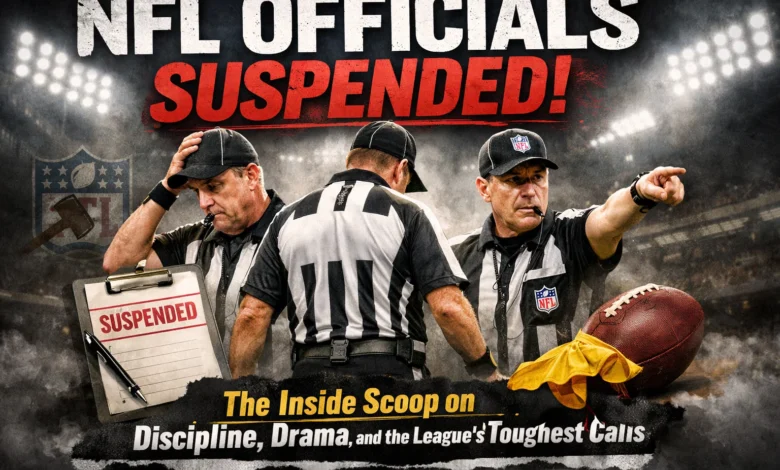
Picture this: It’s a packed stadium on Sunday afternoon, the game is on the line, and suddenly a flag flies—or doesn’t. Fans erupt, players argue, and social media explodes with demands for someone to pay the price. That’s the world of NFL officiating, where every decision is dissected under a microscope. When we talk about NFL officials suspended, we’re diving into one of the league’s rarest and most talked-about topics. Suspensions for refs don’t happen often, but when they do, or when rumors fly about them, it shakes the entire sport. In this deep dive, we’ll explore everything from the history of these disciplinary moves to the recent accountability efforts that have everyone buzzing. Whether you’re a die-hard fan frustrated by missed calls or just curious about what really goes on behind the whistle, stick around. We’ll break it down in plain English, with real stories and insights that make sense even if you’re new to the game.
The pressure on NFL officials is insane. These men and women train year-round, study rules like it’s their full-time job (because for many, it is), and step onto the field knowing millions are watching their every move. Yet mistakes happen—human ones. The NFL has systems in place to handle them, but the public often wants instant justice in the form of suspensions. The truth is more nuanced, and that’s what makes this topic so fascinating. Over the years, a handful of cases have stood out, sparking debates about fairness, consistency, and how the league protects the integrity of the game without turning officials into scapegoats. We’ll get into the specifics soon, but first, let’s set the stage for why NFL officials suspended stories capture our attention like nothing else.
Understanding the Role of NFL Officials and Why Discipline Matters
NFL officials are the unsung heroes—and sometimes villains—of every game. There are seven on the field for most contests: the referee, umpire, down judge, line judge, side judge, field judge, and back judge. Each has a specific job, from spotting the ball to calling penalties on everything from holding to pass interference. They train at the NFL’s officiating clinic, review film obsessively, and get graded on nearly every play. It’s a high-stakes gig where one bad call can change a season.
Discipline matters because the league’s credibility rides on it. Fans pay big money for tickets and streaming, expecting a fair fight. When officiating goes sideways, it can feel like the refs stole the show. That’s why the NFL’s vice president of officiating keeps a close eye on performance. Suspensions, when they occur, aren’t handed out lightly—they’re tools to maintain standards. Think of it like a teacher giving detention only after repeated warnings. Most issues get handled with feedback, extra training, or missed assignments rather than outright bans. But in those rare moments when NFL officials suspended becomes reality, it sends a clear message: The league won’t tolerate anything that undermines trust.
What makes this role unique is the blend of experience and pressure. Many officials come from college ranks or even other pro leagues, bringing years of know-how. Yet the NFL game moves faster, with rules that evolve every season. Discipline isn’t just punishment; it’s about growth. The league invests heavily in its officials because good ones keep games flowing and fair. When things slip, the conversation turns to accountability, and that’s where stories of NFL officials suspended start to pop up in headlines and fan forums.
A Brief History of NFL Official Suspensions
Let’s rewind the tape to see how we got here. NFL officiating has always been under the spotlight, but actual suspensions for officials have been few and far between. Back in the late 1960s, one crew found themselves in hot water after a complete breakdown in basics. During a 1968 game between the Los Angeles Rams and Chicago Bears, officials lost track of the downs entirely. The mistake was so glaring it forced the league to step in and suspend the entire crew for the rest of the season. It was a wake-up call that even the people enforcing the rules could fumble them badly.
Fast forward to the 1980s, and we see another isolated case. Line judge Jack Fette drew a suspension in 1984 after an incident involving conduct toward fans during a Seahawks-Bengals matchup. Details were sparse, but it highlighted that officials weren’t above scrutiny for off-field behavior or fan interactions. These early examples set a tone: Suspensions were reserved for truly egregious errors or conduct that crossed lines, not everyday missed calls. The league preferred to handle most issues internally to avoid turning officials into public punching bags.
By the 2010s, the approach had modernized. Fines became more common than full suspensions. For instance, referee Tony Corrente faced a one-game-check fine in 2012 after an open-mic mishap where he swore during a Colts-Miami game. It wasn’t a suspension, but it showed the league was watching. Umpire Roy Ellison dealt with administrative leave—essentially a de facto suspension—in late 2018 after getting tangled in a player scuffle. He was fined and reinstated, proving the system could be firm yet forgiving. These cases illustrate how NFL officials suspended scenarios evolved from blanket crew punishments to targeted, performance-based actions. The rarity kept the focus on prevention rather than reaction.
Rare Cases Where NFL Officials Faced Serious Consequences
Diving deeper into those standout moments, it’s clear NFL officials suspended isn’t a weekly occurrence. Take the 1968 down-count fiasco again—it’s still referenced today as a benchmark for when the league had no choice but to act. The crew’s error wasn’t just embarrassing; it undermined the game’s outcome and forced rule changes for tracking downs more reliably. Officials learned the hard way that basics matter, and the suspension reinforced accountability across the board.
Another telling example came decades later with Jack Fette’s suspension. Fan interactions are off-limits for good reason, and crossing that line led to real consequences. It wasn’t about a bad call but about professionalism. Fast-forward to Roy Ellison in 2018: His situation involved a dust-up with a player, leading to that administrative leave. The NFL didn’t broadcast it as a full suspension, but the effect was the same—time away to cool off and refocus. These instances are outliers because the league’s grading system catches most issues early. Officials review every game film, get scores on accuracy, and face consequences like missed playoff games long before a suspension hits.
What’s fascinating is how these rare events ripple outward. Fans remember them for years, using them as ammo in debates about “rigged” games or lazy reffing. Yet the officials involved often bounce back stronger, proving the system works when applied sparingly. In the big picture, NFL officials suspended cases remind us that the league values consistency over knee-jerk reactions. It’s not about perfection—impossible in a game this complex—but about owning mistakes and improving.
The 2025 Accountability Crackdown: Three Officials Relegated to College Football
Things got interesting in spring 2025 when the NFL made an unprecedented move. Vice President of Officiating Ramon George oversaw the relegation of three relatively new officials back to Power conference college football. Umpire James Carter (in his second year), line judge Robin DeLorenzo (third year), and down judge Robert Richeson (first year) were the ones affected. This wasn’t framed as a traditional suspension, but the impact felt similar: They were removed from NFL sidelines for the foreseeable future.
The move was all about ramping up accountability. Sources close to the situation described a shifting culture where performance data drives decisions, with no room for favoritism. Carter had seen limited playoff action as an alternate due to injuries at his position, while DeLorenzo and Richeson hadn’t cracked postseason assignments in their eligible seasons. Instead of outright firing them and leaving them to fend for themselves, the league brokered placements in college conferences. It was a first-of-its-kind approach, giving them a path to potentially work their way back through the NFL’s development pipeline.
Insiders noted the collective bargaining agreement made appeals tougher, so this soft landing was strategic. One anonymous official captured the vibe perfectly: “The culture is changing, it’s changing rapidly… It’s changing into a competitive environment where everybody’s equal. There are no favorites. There’s no favoritism. There’s none of that; it’s all about performance.” This crackdown didn’t involve full suspensions, but it fueled conversations about NFL officials suspended and what true accountability looks like. Fans applauded the step, seeing it as the league finally getting tough on underperformers without burning bridges entirely.
The timing mattered too. Coming off a postseason with its share of controversial calls, this signaled a broader push for excellence. It wasn’t punishment for one blown call but a holistic review of careers that hadn’t met the mark yet. For the three officials, it meant honing skills at the college level and hoping for another shot. The NFL avoided the drama of public suspensions while still delivering results. This case stands out as a modern evolution in how the league handles discipline—firm, forward-looking, and focused on long-term quality.
Major Officiating Controversies That Had Fans Demanding Suspensions
We’ve all lived through those games where one call—or lack of one—ruins the night. Remember the 2019 NFC Championship? The infamous “no pass interference” on a blatant hit against the Saints in the final minutes. Rams fans cheered, Saints fans raged, and the internet lit up with calls for heads to roll. No officials were suspended, but the outcry showed how quickly fans pivot to demanding NFL officials suspended when emotions run high.
Fast-forward through the years, and similar flashpoints keep coming. Overtime coin toss mishaps, missed holding penalties in critical drives, and questionable roughing-the-passer flags have all sparked petitions and memes calling for suspensions. In late 2025, a brutal weekend saw multiple games marred by officiating lapses, from pass interference confusion to botched mechanics. Fans took to social media, pushing for investigations and even suspensions of entire crews. One viral post summed it up: “These refs don’t know what pass interference is anymore—time to suspend the lot of them!”
Even legends weighed in. Rob Gronkowski, during Super Bowl week in early 2026, called out the system, saying officiating felt “up in the air” and pushing for full-time officials to reduce errors. He argued that part-time gigs with side jobs led to inconsistency. No suspensions followed these controversies, but they kept the topic alive. The league responds with reviews and rule tweaks, like making certain calls reviewable, but the human element persists. These moments highlight why NFL officials suspended talk surges during playoffs—fans want perfection, and anything less feels like a betrayal.
What these controversies teach us is the power of perception. A single missed call in a high-stakes spot can overshadow an entire season of solid work. Officials face death threats and doxxing, yet they show up week after week. The NFL’s reluctance to suspend often stems from understanding this pressure cooker. Still, the demands keep coming, forcing the league to balance empathy with enforcement.
How the NFL Grades and Disciplines Its Officials Behind the Scenes
Behind the curtains, the NFL’s officiating department runs like a well-oiled machine—mostly. Every official gets graded on accuracy for nearly every snap, using advanced tracking and video review. Scores determine everything from game assignments to postseason berths. It’s data-driven, with supervisors breaking down film to spot patterns in missed calls or mechanics.
Discipline starts subtle: Extra film study, mentorship sessions, or reduced assignments. Only when issues pile up does it escalate to fines, administrative leave, or rarer actions like relegations. The 2025 moves exemplified this—performance metrics guided the decisions without fanfare. The Referees Association plays a role too, ensuring due process while the league pushes for higher standards.
This system isn’t flawless, but it’s designed to catch problems early. Officials know the stakes; a poor grade can sideline them for weeks. When NFL officials suspended does happen, it’s after layers of review. The goal? Protect the game’s fairness without scapegoating individuals for systemic challenges like rule complexity or game speed.
The Human Side: Life as an NFL Official and the Pressure They Face
Let’s humanize this. NFL officials aren’t robots—they’re dads, moms, lawyers, teachers, and more juggling real lives alongside 17 weeks of travel and scrutiny. Many aren’t full-time, which Gronk and others criticize as a recipe for errors. The mental toll is real: Missed family events, constant second-guessing, and the knowledge that one slip-up trends worldwide.
Pressure builds from all sides—coaches yelling, players shoving, fans booing. Yet most love the game and take pride in their craft. Training camps, rule books thicker than novels, and simulator drills keep them sharp. When discipline hits, it’s personal. A fine stings the wallet; a suspension or relegation derails careers. The 2025 trio likely felt that weight, heading back to college fields with dreams of returning.
This human element explains the league’s measured approach. Suspensions aren’t just about rules—they affect families and futures. Officials train to stay neutral, but the job’s intensity makes empathy essential.
Fan and Player Perspectives on NFL Officiating Mishaps
Fans are the lifeblood, and their frustration is valid. Message boards overflow with “Fire the refs!” after bad weekends. Players feel it too—lost games mean lost bonuses and playoff shots. We’ve seen stars like Dre Greenlaw suspended for chasing a ref in frustration, or DK Metcalf tagged for fan confrontations. It cuts both ways.
Coaches bite their tongues publicly but vent privately. The consensus? Officiating needs improvement, but suspensions alone won’t fix it. Full-time roles, better tech, and clearer rules top wish lists. Fans demanding NFL officials suspended often do so out of love for fair play, not hate for the individuals.
What the Future Holds: Technology, Full-Time Officials, and Better Accountability
Looking ahead, change is coming. SkyJudge tech, expanded replay, and AI-assisted reviews could minimize errors. Making officials full-time, as Gronk advocates, would let them focus solely on the game. The 2019 pause on the full-time program was temporary, but momentum builds for revival.
Accountability will evolve too—more data, transparent grading, perhaps even fan input channels. The 2025 relegations hint at a proactive era. NFL officials suspended might stay rare, but prevention through innovation could make them even rarer.
Debunking Viral Rumors About Mass Suspensions of NFL Officials
Social media loves a good conspiracy. In late 2025, posts claimed four refs were suspended after a Cowboys-Lions game or entire crews axed. Fact-checks quickly labeled them clickbait. No mass suspensions occurred—the league investigates quietly but doesn’t fire crews en masse.
These rumors thrive on real frustrations but distort facts. The NFL addresses issues individually. Understanding this separates hype from reality and keeps focus on actual improvements.
Table: Notable NFL Officiating Disciplinary Actions
| Year | Official(s) Involved | Action Taken | Reason/Context |
|---|---|---|---|
| 1968 | Entire crew (led by Norm Schachter references) | Full crew suspension | Lost track of downs in Rams-Bears game |
| 1984 | Line Judge Jack Fette | Suspension | Conduct toward fans in Seahawks-Bengals game |
| 2012 | Referee Tony Corrente | One-game-check fine | Swearing caught on open mic during Colts-Miami game |
| 2018 | Umpire Roy Ellison | Administrative leave (de facto suspension) and fine | Involvement in player dust-up |
| 2025 | Umpire James Carter, Line Judge Robin DeLorenzo, Down Judge Robert Richeson | Relegation to college Power conferences | Performance-based accountability under VP Ramon George |
This table captures the scarcity—five key instances over nearly 60 years.
“The culture is changing, it’s changing rapidly… It’s all about performance.” – Anonymous NFL official on the 2025 shifts
“Officiating should be full-time… That makes absolutely no sense otherwise.” – Rob Gronkowski, reflecting on consistency in 2026
FAQ
Why are NFL officials suspended so rarely compared to players?
NFL officials suspended cases are uncommon because the league uses a tiered system of feedback, grading, and training first. Officials undergo constant evaluation, and most issues get fixed without public discipline. Players face stricter personal conduct rules, while refs get more internal handling to preserve on-field authority. Suspensions only hit for extreme breaches, keeping the focus on game integrity without unnecessary drama.
What happened with the three officials relegated in 2025?
In 2025, the NFL sent second-year umpire James Carter, third-year line judge Robin DeLorenzo, and first-year down judge Robert Richeson back to college Power conferences. It was a performance-driven accountability move by VP Ramon George, not a full suspension but with similar career impact. They can potentially climb back via development programs, showing the league’s emphasis on growth over outright bans.
Do blown calls ever lead directly to NFL officials suspended?
Rarely. High-profile misses spark outrage and calls for NFL officials suspended, but the league opts for reviews, missed assignments, or fines instead. Historical precedents like the 1968 crew suspension show action only for catastrophic errors. Modern cases favor data-backed adjustments to avoid turning officials into villains for human mistakes in a fast-paced sport.
How does the NFL handle rumors of mass suspensions for officials?
The league stays silent on most rumors, letting fact-checks reveal them as clickbait. Viral claims about entire crews being suspended after games like Cowboys-Lions often lack evidence. Official statements or reports confirm no mass actions occur; instead, targeted reviews happen quietly to maintain focus on the season.
Can suspended NFL officials return to the league?
Yes, in most cases. Historical examples show officials rebounding after fines or short leaves through improved performance. Even the 2025 relegated trio have pathways back via college work and the development program. The system rewards rehabilitation, balancing discipline with opportunity for redemption.
What role does technology play in reducing the need for suspensions?
Tech like replay reviews, tracking systems, and potential AI grading catches errors early, lessening the chance of NFL officials suspended scenarios. It supports officials rather than replacing them, aiming for fewer controversies overall and a fairer game that fans can trust.
Conclusion
Wrapping this up, the world of NFL officials suspended reveals a league striving for balance in a high-pressure environment. From rare historical crackdowns to the 2025 accountability push, it’s clear the NFL takes its officiating seriously without overreacting. Fans deserve fair games, officials deserve support, and the sport benefits when both sides meet in the middle. As technology advances and full-time roles potentially return, we might see fewer controversies—and even fewer whispers of suspensions. Until then, keep enjoying the games, knowing the refs are human too. The next time a flag flies, remember the bigger picture: It’s all part of what makes the NFL the thrilling spectacle it is. Thanks for reading—now go cheer on your team, and maybe cut the stripes a little slack.