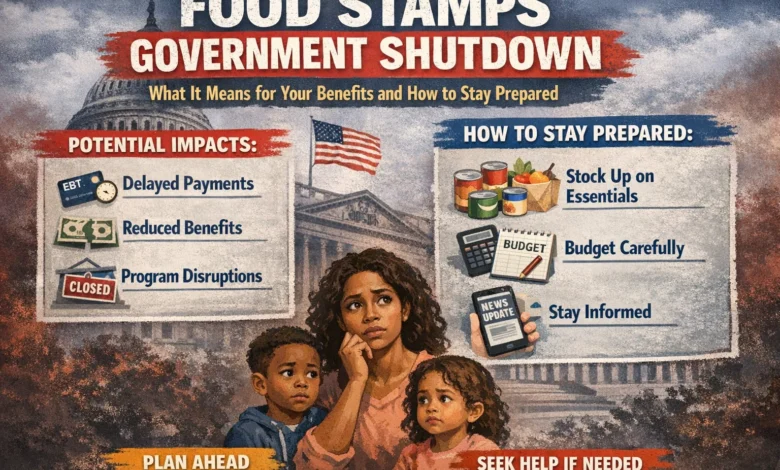
Imagine opening your EBT card app one morning and seeing no fresh deposit when you expected one. That knot in your stomach is exactly what millions of families felt during the recent food stamps government shutdown events of late 2025. Food stamps, officially known as the Supplemental Nutrition Assistance Program or SNAP, form a critical lifeline for over 40 million Americans each month, helping put groceries on the table when times get tight. Yet when federal funding hits a snag because of political gridlock in Washington, questions swirl about whether those benefits will keep flowing.
In this comprehensive guide, we break down everything you need to know about a food stamps government shutdown—from the basics of how the program works to real-world impacts from past and recent shutdowns. We’ll explore why disruptions happen, what states are doing to help, and smart steps you can take right now to protect your household. Whether you’re a current recipient, someone applying soon, or just curious about how federal budget battles touch everyday life, this article arms you with clear, actionable insights. The good news? Most disruptions are temporary, and understanding the system puts you ahead of the curve.
Understanding Food Stamps and the SNAP Program
Food stamps have been a cornerstone of American food security since the 1960s, evolving into today’s SNAP program that helps low-income households buy nutritious food at grocery stores, farmers markets, and even some online retailers. Administered by the U.S. Department of Agriculture through state agencies, SNAP issues benefits via electronic benefit transfer cards that work just like debit cards at the checkout. You swipe, select eligible items like bread, milk, fruits, vegetables, and meat—no hot foods or non-food items allowed.
The program’s eligibility rules focus on household income, size, expenses, and assets. For a family of four, the gross income limit usually hovers around 130 percent of the federal poverty line, though some states have broader options. Benefits average about $200 per person monthly, but the exact amount depends on your situation—larger families or those with high shelter costs often qualify for more. What makes SNAP so powerful is its flexibility: recipients choose what to buy, empowering dignity and choice instead of rigid food boxes.
Beyond the immediate help, SNAP delivers ripple effects across the economy. Every dollar in benefits generates nearly two dollars in local spending at stores, supporting jobs in retail and agriculture. During tough times like recessions or natural disasters, the program scales up quickly to meet surging need. Yet its reliance on annual federal appropriations means that when Congress fails to pass a budget or continuing resolution, the whole system can feel the pinch. That’s where the conversation around a food stamps government shutdown begins for many families who count on that steady support.
What Exactly Is a Government Shutdown?
A government shutdown occurs when Congress and the president cannot agree on funding legislation, causing non-essential federal operations to halt while essential services continue under limited authority. Think of it as the federal government hitting pause on spending that requires fresh approval each year. Hundreds of thousands of civilian employees may be furloughed without pay, national parks close their gates, and regulatory reviews slow to a crawl. But programs with multi-year funding or mandatory spending—like Social Security—keep running uninterrupted.
Shutdowns are not rare in U.S. history, with over a dozen since the modern rules took shape in the 1970s. They usually stem from partisan disagreements over spending priorities, debt ceilings, or policy riders attached to must-pass bills. The longest on record stretched 35 days in 2018-2019, but the 2025 episode that began October 1 and ended November 12 shattered that mark, becoming the most prolonged in history. During these periods, the pain is not evenly distributed: federal workers miss paychecks, contractors lose business, and safety-net programs face uncertainty if their administrative funding dries up.
What sets a food stamps government shutdown apart is the direct link to daily survival for millions. While SNAP benefits themselves are often pre-obligated or covered by contingency reserves in normal scenarios, recent events showed that political decisions can override technical safeguards. Families who budget tightly around their monthly deposit suddenly face gaps, forcing tough choices between rent and food. Understanding this mechanism helps demystify why one missed payment creates waves far beyond the Beltway.
How Food Stamps Are Funded and Why Shutdowns Matter
SNAP funding flows through the federal budget process, with the USDA’s Food and Nutrition Service handling the bulk of costs for benefits while states cover about half of administrative expenses. Congress typically appropriates funds annually, but the program benefits from multi-year contingency reserves built up over time to handle emergencies like disasters or, in theory, short funding lapses. These reserves act as a buffer, allowing benefits to continue even when regular appropriations expire.
Why do shutdowns matter then? Because not every administration interprets the rules the same way. In standard contingency plans, October benefits (the first month of the federal fiscal year) are often pre-loaded from prior-year funds, and subsequent months can draw from reserves. However, during the 2025 food stamps government shutdown, the USDA under the Trump administration initially declined to tap those reserves for November payments, citing legal interpretations that limited them to true disasters like hurricanes. This reversal from earlier internal plans caught many states off guard and triggered lawsuits from two dozen states plus the District of Columbia.
The result was a patchwork of delays and partial issuances across the country. Some states fronted their own money temporarily, others issued only 65 percent or less, and a few managed full payments through court orders or creative accounting. Once the shutdown ended on November 12, full November benefits were restored retroactively, but the scramble left many households scrambling for food bank help in the interim. This episode highlighted how a food stamps government shutdown is not just about missing checks—it’s about eroded trust in a system designed to prevent hunger.
Historical Impact: Past Government Shutdowns and Food Stamps
Looking back, most government shutdowns left SNAP largely untouched thanks to proactive planning. During the 2013 shutdown, which lasted 16 days, benefits continued without interruption because funding had already been secured through the fiscal year. Recipients never noticed a difference, and new applications processed normally at state levels. Similarly, the 2018-2019 shutdown saw the USDA explicitly confirm that contingency funds would cover operations, ensuring no lapse in monthly deposits or eligibility determinations.
Those earlier episodes taught valuable lessons about communication and preparedness. States ramped up outreach, reminding people to check EBT balances early and stock up on shelf-stable goods if needed. Food banks reported modest upticks in demand but nothing catastrophic because the core benefit pipeline stayed open. The key difference in recent years boils down to policy choices at the federal level rather than mechanical failures in the program itself.
What stands out across history is SNAP’s resilience as an entitlement program. Unlike discretionary spending that grinds to a halt, nutrition assistance was crafted with safeguards precisely to avoid using hungry families as bargaining chips. Yet the 2025 disruption proved that even strong designs can bend under intense political pressure, prompting calls for legislative reforms to lock in automatic funding triggers during lapses. For families who lived through those past events, the consistency provided peace of mind that recent headlines have shaken.
The 2025 Government Shutdown: What Happened to SNAP Benefits
The 2025 food stamps government shutdown delivered a harsh reality check for SNAP households nationwide. Starting October 1, the federal funding impasse stretched into November, and on October 24 the USDA notified states that November benefits would not be funded through normal channels. The administration argued contingency reserves could not legally cover routine monthly payments, a stance that contradicted some earlier planning documents. Courts in multiple states stepped in, ordering partial releases, while governors in places like Massachusetts and Illinois directed state resources to bridge gaps.
By early November, the picture varied wildly by location. In some Democratic-led states, full or near-full benefits appeared on EBT cards within days thanks to emergency state funding or lawsuits. Other areas saw only 25 to 65 percent deposited initially, with the remainder promised after the shutdown lifted. Recipients in rural communities and urban food deserts felt the squeeze hardest, as local pantries quickly ran low on staples. The USDA later committed to restoring all November benefits by November 20 once Congress passed a deal ending the impasse on November 12.
This episode marked the first time in modern history that SNAP faced widespread delays tied directly to a shutdown, affecting roughly 40 million people. It sparked urgent conversations in Congress about protecting nutrition programs from future political volatility. For many families, the delay meant skipping meals, relying on credit cards, or turning to community networks—experiences that underscored the human cost when Washington gridlock collides with dinner tables.
Will a Future Government Shutdown Affect Food Stamps?
As of early 2026, the outlook is more stable because SNAP and related programs like WIC carry funding through September 2026. That multi-year appropriation means even if another funding lapse hits in the coming months, your February through October deposits should arrive on schedule without the November 2025 drama. The USDA’s current posture emphasizes continuity, and states have updated their own contingency protocols based on last year’s lessons.
That said, no one can predict political winds with certainty. If a shutdown occurs after the current funding window closes, the same debates over contingency reserves could resurface. Advocates are pushing for permanent legislative language that would automatically trigger reserve use during any lapse, removing discretion and ensuring benefits flow regardless of administration. In the meantime, monitoring congressional budget talks and signing up for state agency alerts keeps you one step ahead.
Families can also build personal buffers by treating SNAP like any other monthly bill—saving a small portion when possible or coordinating with local food assistance calendars. The goal is turning potential uncertainty into manageable planning rather than panic. With recent memory of the 2025 events still fresh, preparedness has never been more practical.
What to Do If Your Food Stamps Are Delayed During a Shutdown
If you wake up to a food stamps government shutdown delay on your EBT card, the first step is simple: stay calm and check official channels. Log into your state’s SNAP portal or call the local hotline—many agencies post real-time updates on benefit timelines. Existing balances remain fully usable, so stretch what’s already loaded by prioritizing nutritious basics and shopping sales.
Next, reach out to nearby food banks and pantries through networks like Feeding America. Many ramp up distributions during federal disruptions and can provide emergency boxes while you wait. Apply for any state-specific emergency aid if available; some governors activate temporary assistance programs precisely for these scenarios. If you have children, seniors, or disabled household members, double-check eligibility for add-on benefits like Summer EBT or utility assistance that might offset the gap.
Document everything—keep screenshots of notices and track expenses—so you can claim any retroactive adjustments once payments resume. And remember, you do not need to reapply for SNAP just because of a shutdown; your certification period continues uninterrupted. These proactive moves transform a potential crisis into a short-term hurdle, keeping your family fed and your stress levels lower.
State Responses and Variations During Shutdowns
States play a pivotal role when federal funding wavers, and their responses during the 2025 food stamps government shutdown demonstrated both creativity and commitment. California and New York, for instance, leveraged state budgets to issue full November benefits early, reimbursing themselves later from federal dollars. Texas and Florida took a more cautious approach, releasing partial payments while awaiting USDA guidance, which left some households bridging the difference with community support.
These variations highlight why knowing your state’s track record matters. Governors in both parties issued executive orders directing agencies to prioritize SNAP processing and explore emergency reserves. Some states even partnered with retailers for targeted discounts on staple foods for EBT users, stretching limited dollars further. The patchwork nature, while frustrating for recipients moving between states, ultimately prevented total nationwide collapse.
Looking ahead, many legislatures are debating bills to create state-level nutrition contingency funds that activate automatically during federal lapses. These measures aim to insulate families from Washington’s dysfunction, ensuring smoother continuity no matter the political climate. Tracking your state human services website keeps you informed about the specific protections in your backyard.
Alternatives to Food Stamps During Government Shutdowns
When SNAP deposits pause, families turn to a web of community resources that step up quickly. Local food banks and pantries often receive surge donations during shutdown periods, offering free produce, proteins, and shelf staples through drive-thru or walk-in models. Programs like WIC for pregnant women, infants, and young children usually maintain separate funding streams and continue operating, providing formula, cereal, and dairy even when SNAP hits snags.
School meal programs and summer feeding sites remain open in most districts, serving breakfast and lunch to kids regardless of federal status. Churches, nonprofits, and mutual aid groups frequently organize pop-up distributions tailored to neighborhood needs. For working households, employee assistance programs or union funds sometimes include grocery gift cards as emergency support.
Building a small home pantry in normal times—canned goods, rice, pasta—acts as your personal safety net during any food stamps government shutdown. Community gardens and farmers market SNAP matching programs can stretch dollars when benefits resume, turning temporary hardship into long-term resilience. The key is layering multiple supports so no single delay leaves you empty-handed.
Long-Term Effects on Families and Communities
Beyond the immediate missed meals, a food stamps government shutdown ripples through families in ways that last months or years. Children facing hunger show lower school attendance and concentration, potentially widening achievement gaps. Adults report higher stress levels that strain relationships and job performance, creating a cycle where financial insecurity deepens. Communities with high SNAP participation see local grocery sales dip, threatening small businesses and reducing tax revenue that funds schools and roads.
On a broader scale, repeated disruptions erode public confidence in safety-net programs, making families hesitant to apply even when eligible. Nutrition experts note measurable declines in diet quality during prolonged gaps, with families substituting cheaper, less healthy options that contribute to chronic health issues over time. Economists calculate that each month of delayed benefits costs the broader economy millions in lost productivity and increased healthcare spending.
Yet these challenges also spark innovation. After the 2025 events, advocacy groups pushed harder for automatic stabilizers in nutrition policy, and some states piloted guaranteed income pilots tied to food security metrics. The long-term lesson is clear: protecting SNAP from political volatility safeguards not just individual households but the economic and social fabric of entire neighborhoods.
Expert Opinions and Quotes on Food Stamps Government Shutdown
Nutrition advocates and policy analysts have weighed in strongly on recent events. One leading voice from the Center on Budget and Policy Priorities noted, “Contingency reserves exist precisely to prevent exactly this kind of disruption—using them during shutdowns upholds congressional intent and protects vulnerable families from becoming pawns in budget battles.” Their perspective underscores the technical feasibility of uninterrupted benefits when political will aligns.
A state human services director in a hard-hit region shared during the 2025 crisis, “We saw families who had never needed extra help before lining up at pantries because a single month’s delay upended their carefully balanced budgets. The human stories behind the numbers remind us why swift resolution matters.” These firsthand accounts highlight the emotional toll that numbers alone cannot capture.
Economists tracking the 2025 shutdown observed that timely SNAP restoration prevented deeper recessionary effects in low-income areas. As one analysis put it, “Every day of delay compounds into lost grocery spending that ripples through supply chains—protecting the program is protecting jobs and stability.” Such insights from experts reinforce that a food stamps government shutdown is not merely administrative; it carries real-world consequences that demand attention and reform.
| Shutdown Period | Duration | SNAP Benefit Impact | Key Outcome |
|---|---|---|---|
| 2013 | 16 days | No disruption; benefits issued on schedule | Full continuity thanks to pre-appropriated funds |
| 2018-2019 | 35 days | Minimal delays; contingency reserves used | Benefits continued with proactive USDA planning |
| 2025 (October-November) | 43 days | Widespread November delays and partial payments in many states | First major interruption; resolved retroactively after court actions and shutdown end |
| Potential 2026 scenarios | Varies | Likely none until September 2026 funding window closes | Multi-year appropriations provide buffer |
This table illustrates how responses have evolved, offering a clear snapshot for readers tracking patterns over time.
Conclusion
Navigating the possibility of a food stamps government shutdown requires knowledge, preparation, and a bit of perspective. While the 2025 events exposed vulnerabilities in how the system handles extreme political stalemates, they also revealed the strength of state-level innovation and community solidarity. SNAP remains one of the most effective tools we have for fighting hunger, and understanding its funding mechanics empowers you to advocate for stronger protections while taking practical steps at home.
Whether you’re reviewing your budget, connecting with local resources, or simply staying informed through official alerts, small actions add up to big resilience. As funding holds steady through September 2026, use this window to build habits that cushion any future bumps. Ultimately, a food stamps government shutdown reminds us that policy decisions in distant halls directly shape dinner tables across the country—yet informed families and responsive communities can bridge those gaps until stability returns. Stay proactive, reach out when needed, and remember that support networks exist precisely for moments like these.
FAQ
What is a food stamps government shutdown and how does it differ from regular SNAP delays?
A food stamps government shutdown refers to disruptions in SNAP benefit issuance caused specifically by a federal lapse in appropriations when Congress fails to pass funding bills. Unlike routine processing delays from paperwork or eligibility reviews, these stem from broader budget impasses that can halt administrative funding even if benefits are technically authorized. In the 2025 case, the distinction became clear when the USDA initially withheld November payments despite available reserves, creating unprecedented nationwide uncertainty until courts and Congress intervened.
Will my existing EBT balance still work during a food stamps government shutdown?
Absolutely—any money already loaded on your EBT card remains fully accessible and usable for eligible food purchases throughout a food stamps government shutdown. The disruption typically affects only new monthly deposits, not previously issued benefits. This built-in safeguard means you can continue shopping with what’s on hand while awaiting updates, stretching your current balance by planning meals carefully and using store loyalty programs.
How long does it usually take to receive back payments after a food stamps government shutdown ends?
Once the shutdown concludes and funding is restored, most states aim to load full retroactive benefits within a few days to a week. In the 2025 resolution, the USDA targeted completion by November 20 for all recipients, with many seeing deposits as early as the day after the deal passed. Timelines vary slightly by state technology and caseload size, but federal guidance requires prompt action to minimize hardship.
Can I still apply for SNAP benefits if a food stamps government shutdown is happening?
Yes, you can and should apply during a food stamps government shutdown. State agencies continue accepting applications, though processing times may lengthen because of reduced federal support for administrative tasks. Approval decisions and initial benefit issuance could face delays, but once the shutdown lifts, eligible households receive benefits retroactive to their application date. Starting the process early ensures you’re in line when payments resume.
What resources are available if my family faces delays from a food stamps government shutdown?
Beyond your EBT card, turn to local food banks affiliated with Feeding America, community pantries, and state emergency assistance programs that often activate during federal disruptions. Many areas also offer school meal extensions, WIC clinics that operate independently, and nonprofit grocery gift card drives. Contact your state SNAP hotline immediately for personalized guidance, and consider signing up for text alerts from both federal and local agencies to stay ahead of any updates.